
You know that sinking feeling when someone looks a little triumphant because you haven’t read that book, seen that film or heard that album? I hate it. I can’t help feeling like I’ve failed a test.
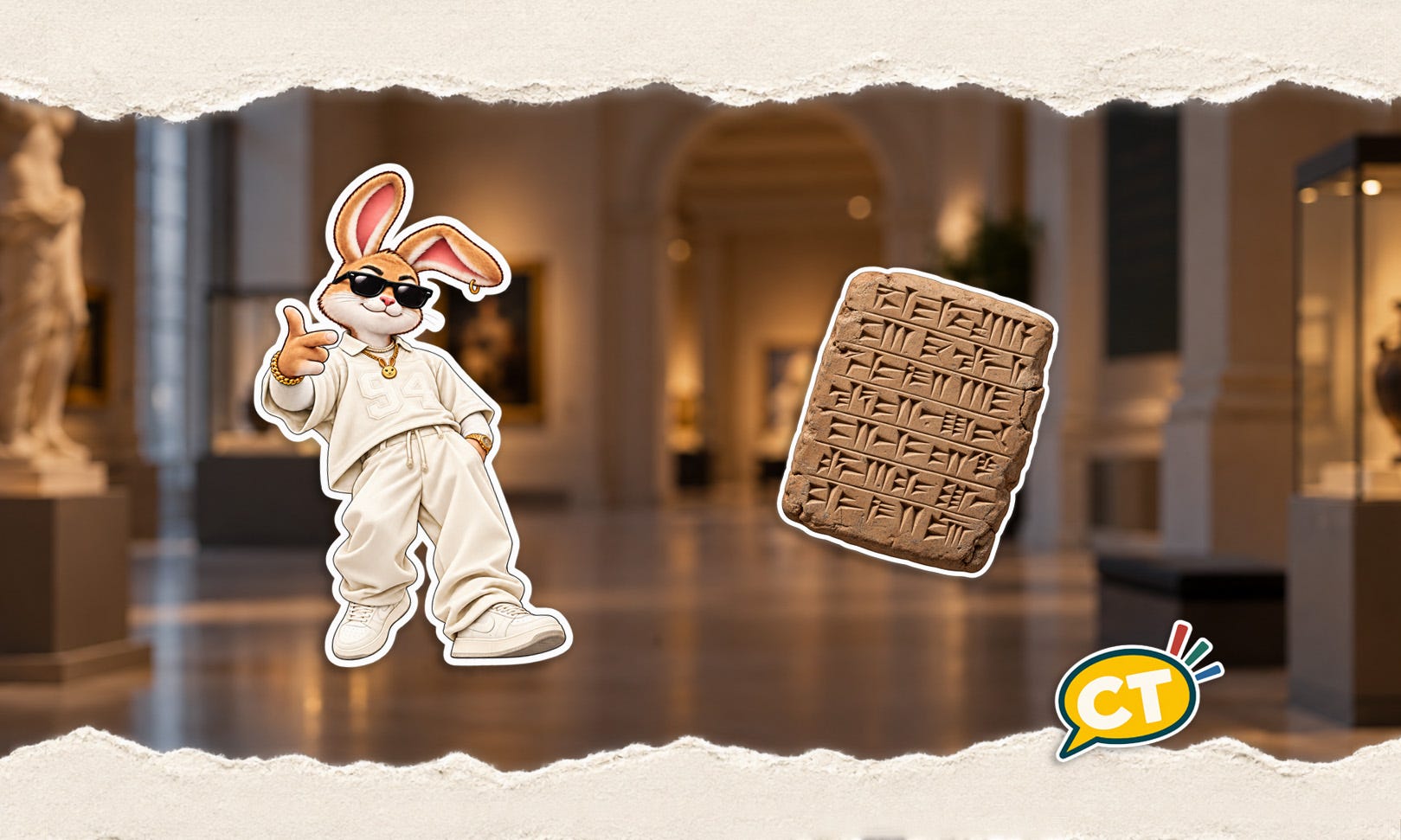
So, imagine how stupid I felt when I recently realised that the Super Bowl had, in fact, not booked some promising newcomer for its halftime show. Why would they? It was just that several holes in the fabric of my cultural knowledge happened to line up and out jumped Bad Bunny. Not a debutant. Not an underground secret. A global phenomenon.
My relationship with rap music never got further than Coolio’s “Gangsta’s Paradise”, so perhaps it’s no great surprise that Latin trap had passed me by. I’m also 52, which means I guard the entry to my playlists like a greedy dragon these days. But still. I felt caught out.
Culture is supposed to make life richer, but the more I thought about this, the more it felt like revising for an exam I didn’t remember signing up for. I decided to do some research.
At one tablet a day, getting through the British Museum’s cuneiform collection alone would require you to live for about 350 years. And that’s way before you get a sniff of Homer, let alone Homer Simpson.
And that’s only the texts. Add music, art, theatre, film and TV to the mix, and it quickly becomes ridiculous to worry about one missed book, film or song. Try to work your way through all of it, and you’re not bloody likely to live long enough to reach Lady Gaga or Bad Bunny. The sun will turn into a red giant and incinerate both Earth and your ridiculously high cultural ambitions before you catch up.
I had done the maths. I was completely off the hook. Nobody can keep on top of culture. The best any of us can do is scratch the surface.
And yet Bad Bunny still bothered me. Why?
Apparently, I cared
Part of it was vanity. Your cultural diet says something about you. It’s the human equivalent of curb appeal in suburbia. It’s your chance to shine a little brighter in the eyes of others. This is, of course, not very flattering to admit, but sometimes it’s easier to channel my inner Hyacinth Bucket than to face the awkward truth.
Part of it was identity. Not having a clue about Bad Bunny made me feel old. It challenged my self-image of being broadly culturally literate. It exposed how European and English-language-heavy my cultural bubble is. Ouch!
Hardly a revelation, I know. But there’s a difference between knowing your map is partial and having the blank spaces glaring straight at you. It stung. You can’t consume all culture. But the gaps form patterns. To some extent, it’s inevitable. Proximity – geography, language and time – matters. You are more likely to stumble across what is close to you.
That said, it is still embarrassing that I can quote Shakespeare, ABBA and Schitt’s Creek extensively and don’t panic if a film has subtitles, but I would struggle to name three major Latin American artists shaping music today.
My little Bad Bunny panic might seem trivial, but no. Even if you have a curious mind, lounging in the comfort zone provided to you by circumstance won’t do. Curiosity is not enough.
Checklist, please
The enormity of culture can feel a bit much, so we make lists. A hundred novels to read before you die. Fifty films everyone should see. Sometimes we create whole national canons. They offer the illusion that an infinite cultural conversation can somehow be neatly reduced to a finite test.
A list is a ridiculously thin straw through which to inhale all the wonders culture has to offer. Why gasp for culture when frivolously inhaling big gulps of it is so much more fun and rewarding?
The problem is that we have been taught to use culture to prove we belong, rather than to help us discover where we belong. Conversations about culture should not be a quiz or a not-so-subtle judgement. When culture is reduced to a status flex, curiosity goes to die.
The next time someone looks a little too triumphant because I haven’t read, seen or heard something, I’m going to try:
“I haven’t got to that one yet. Should I?”
Maybe it’s just a silly test.
But what if it’s an invitation?