

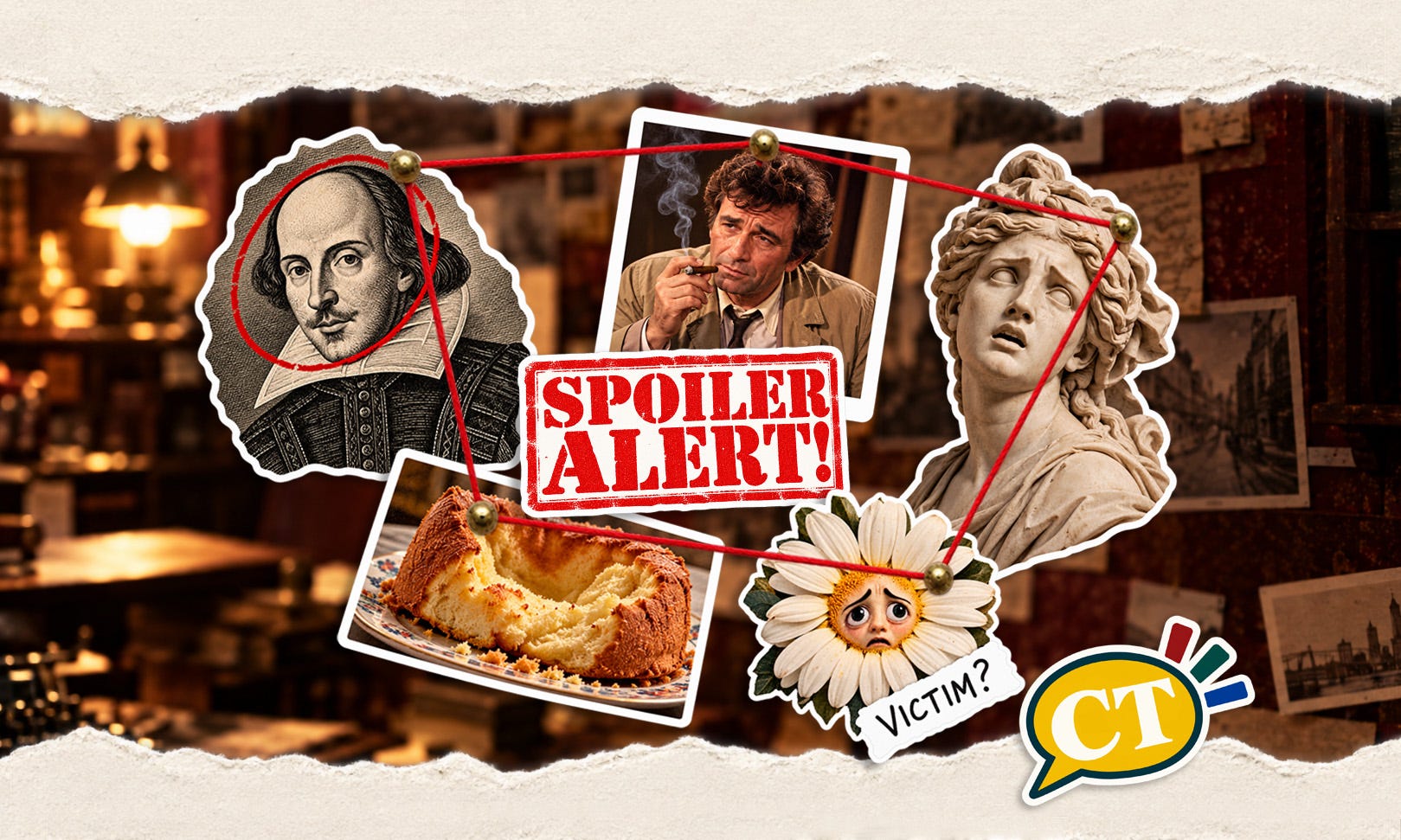
Next to murder, it seems like one of the worst things you can do to your fellow man is to spoil a cultural experience. Heaven forbid you accidentally mention a plot twist or reveal a murderer before the story is good and ready to expose them.
For a long time, I simply accepted this as truth. But then I picked up just about every bug the Gothenburg Book Fair had to offer and had to stay put on the sofa for a few days. I did what I always do when I’m sick. I rewatched a few old favourites for the hundredth time.
Somewhere around the time Maria once again made hideous clothes for the von Trapp kids out of the curtains in Salzburg, it struck me that knowing exactly where it would all end didn’t bother me at all. Hmm…
I then moved on to Orlando. I’ve read and reread the book many times. I watch the film at least once a year. Absolutely nothing comes as a surprise. And I still find immense pleasure in Tilda Swinton turning to the camera in the library and sighing: “Ah, poetry!” It gets me every time. Knowing it’s coming, if anything, just makes it better.
But then again, neither The Sound of Music nor Orlando depends heavily on shock and surprise to drive the story. They work on a different level. What about genres that do rely heavily on that? Would Murder on the Orient Express work if we knew who did it all along?
I spent some time in my fever haze pondering this. I came down on a firm no. Why would we come along for the ride if we already knew the destination? What a waste of time. Then Columbo popped into my head.
I grew up watching the charming, scruffy-looking detective Columbo catch murderers whose identities I already knew. That was the show’s shtick. We knew the perpetrator all along, and still sat nicely for an hour and a half watching Columbo get there through an endless succession of “Just one more thing…”
The show ran from 1971 to 1978, with more episodes appearing years later. Clearly the concept worked. There’s even a name for this kind of inverted detective story: howcatchem. Even Alfred Hitchcock dabbled in it with Dial M for Murder.
Most howcatchems, though, work because they preserve some mystery around how the crime will be uncovered. You know who did it, but you still get the considerable pleasure of watching the murderer squirm.
The legendary crime writer Ruth Rendell probably took a stern look at all that, thought for a moment, and said, “Hold my beer!” Then she sat down and wrote A Judgement in Stone. It begins with this sentence:
“Eunice Parchman killed the Coverdale family because she could not read or write.”
Wow! The first sentence reveals the murderer, the victims and the motive. Then, mysteriously and magnificently, Rendell keeps readers on the edge of their seats for the rest of the novel. We know we’re heading towards disaster, and we just can’t look away.
Maybe we've been giving surprise far too much credit. Watching a disaster unfold while everyone involved is still blissfully unaware can be delicious. So can recognising something familiar, even when you've seen it a hundred times before. And disturbingly, knowing that someone is about to murder an entire family can make your evening a good one.
Of course, I’m a few thousand years late to this particular revelation. We’d been surviving spoilers for a very long time before we all went soft and started demanding a rigorous “Spoiler alert!” regime.
Ancient Greeks wouldn’t have called it a spoiler if someone happened to mention Cassandra’s fate while getting seated before a performance of Agamemnon. They already knew. Even Cassandra herself went about her business right up until her death, despite knowing exactly what was coming. She had her life messed up by a divine spoiler of unparalleled proportions. And, ironically, part of her curse was that nobody ever believed her spoilers.
The Tudor audience didn’t seem to care much about spoilers either. If they had, they would have lynched Shakespeare. After all, he spoiled Romeo and Juliet's tragic end in the prologue.
And really, if a story is so delicate it completely falls apart when someone tells you what’s coming, maybe it was letting the surprise do too much heavy lifting to begin with. Perhaps it’s just the cultural equivalent of what Mary Berry would cheekily call a soggy bottom.
I got up from the sofa and made myself a cup of tea. It felt really good to know that not even a mean flu could muddle my thinking.
Back under the covers with the dog, I congratulated myself on my keen mind and impeccable rationality.
Also, I once almost throttled my brother when he said:
“Kevin Spacey? You mean Keyser Söze?”

I’d love to hear your thoughts. Big, small or silly. You’re amongst friends here. Spill it! :-)
Peckish for more?


Illustrations created by ChatGPT.