

I haven't seen You Can See Everything, the new documentary about disgraced Theranos founder Elizabeth Holmes. I live in Sweden, and it hasn’t premiered here yet. That hasn't stopped me from going down a spectacular Elizabeth Holmes rabbit hole.
Somewhere along the way, I came across this image. It immediately set off my art history spidey senses: Why does this picture of Elizabeth Holmes look suspiciously like a crucifixion?
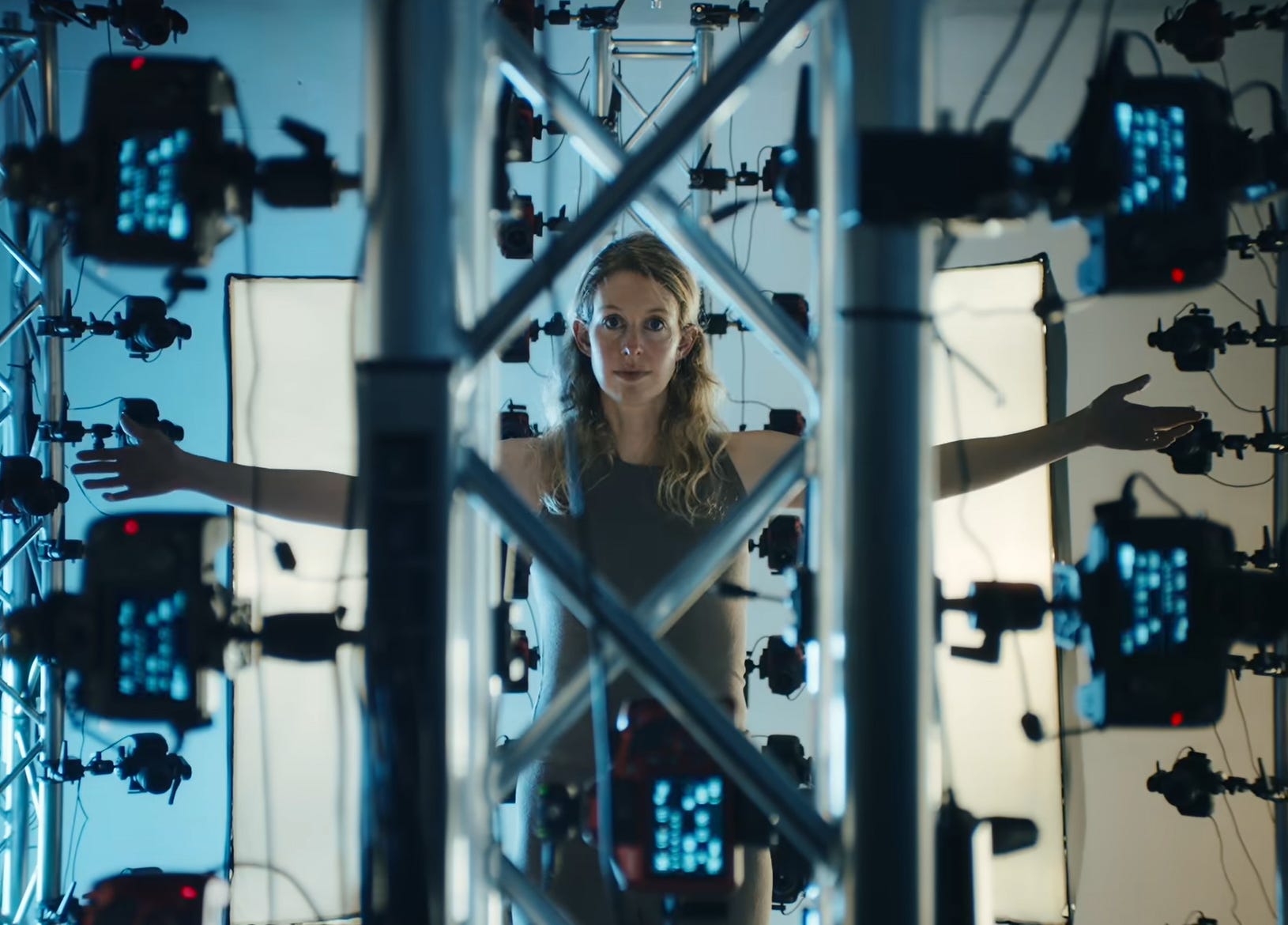
Let’s have a look at it together. On the surface, it’s a bit odd but simple. Holmes is being 3D scanned so an AI version of her can go about its business while the real thing is in jail. Or perhaps, more accurately, go about her husband Billy’s business while she’s in jail. It’s complicated and also a bit creepy.
But here are the five things that jumped straight out at me:
The pose: Outstretched arms scream crucifixion, even if they’re probably required for the scan. Her body forms a cross, and she is facing us directly. You’ve seen it before in just about every Christian church on the planet.
The composition: She’s placed at the centre of the picture with an extraordinary sense of symmetry. The vertical rig creates a triptych-like effect, reminiscent of Christian iconography throughout the centuries.
The lighting: The illuminated panels behind her give the scene an almost otherworldly quality. She appears suspended in light, much as artists have suggested divinity for centuries, from Rembrandt and Dalí to Jesus Christ Superstar and Andres Serrano’s Piss Christ.
The framework: The dark metal machinery surrounds her with geometric shapes that look like some sort of futuristic altarpiece. If you like your things symmetrical, a Christian altarpiece will more often than not deliver.
The expression: She stares straight at us, remarkably serene amid all that equipment. Slap a beard on her, and she’ll look like every Jesus painting in every granny’s parlour ever.
I have no idea if Holmes engineered it this way or if the filmmakers intended the religious associations, but that’s beside the point. Culture rarely works in a straight line from A to B. We’re all so steeped in it that it oozes out of us and seeps back in, whether we intend it or not.
I will say this, though. If I were a disgraced Silicon Valley CEO looking to rebrand my downfall as a story of suffering and redemption (and lacked all sense of proportion, obviously), this is exactly the picture I would want out there. It says it all.
I was sacrificed. I’m resurrected. I’m ascending to (digital) immortality.

I’d love to hear your thoughts. Big, small or silly. You’re amongst friends here. Spill it! :-)
You’ve just read a Tiny Tendency, the smaller sibling of the usual Cultural Tendencies essay: one little thing I’ve noticed about culture, taken seriously for a few minutes—just for fun. Tiny Tendencies appear every other week, between the longer essays.
Peckish for more?


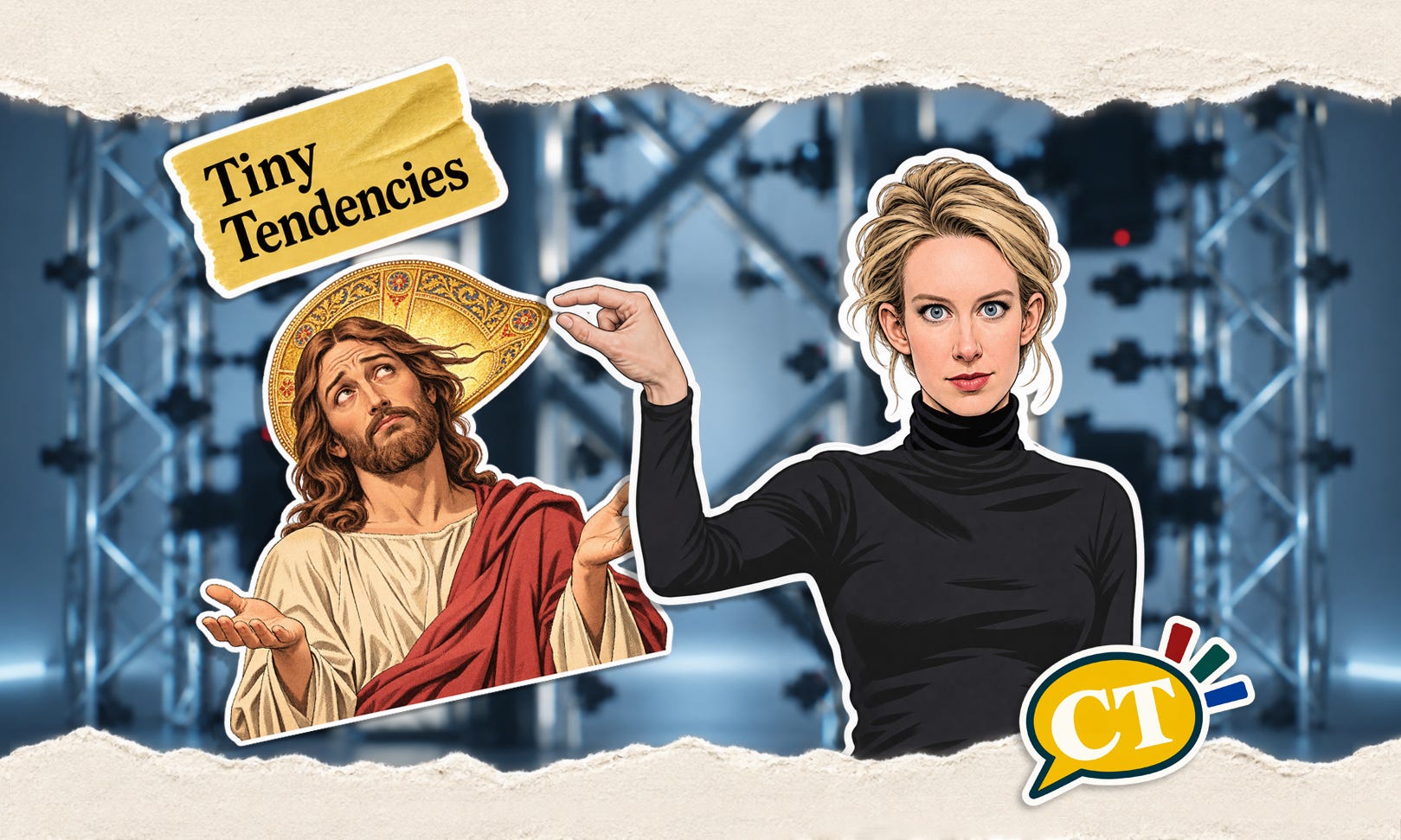
Illustrations created by ChatGPT.