

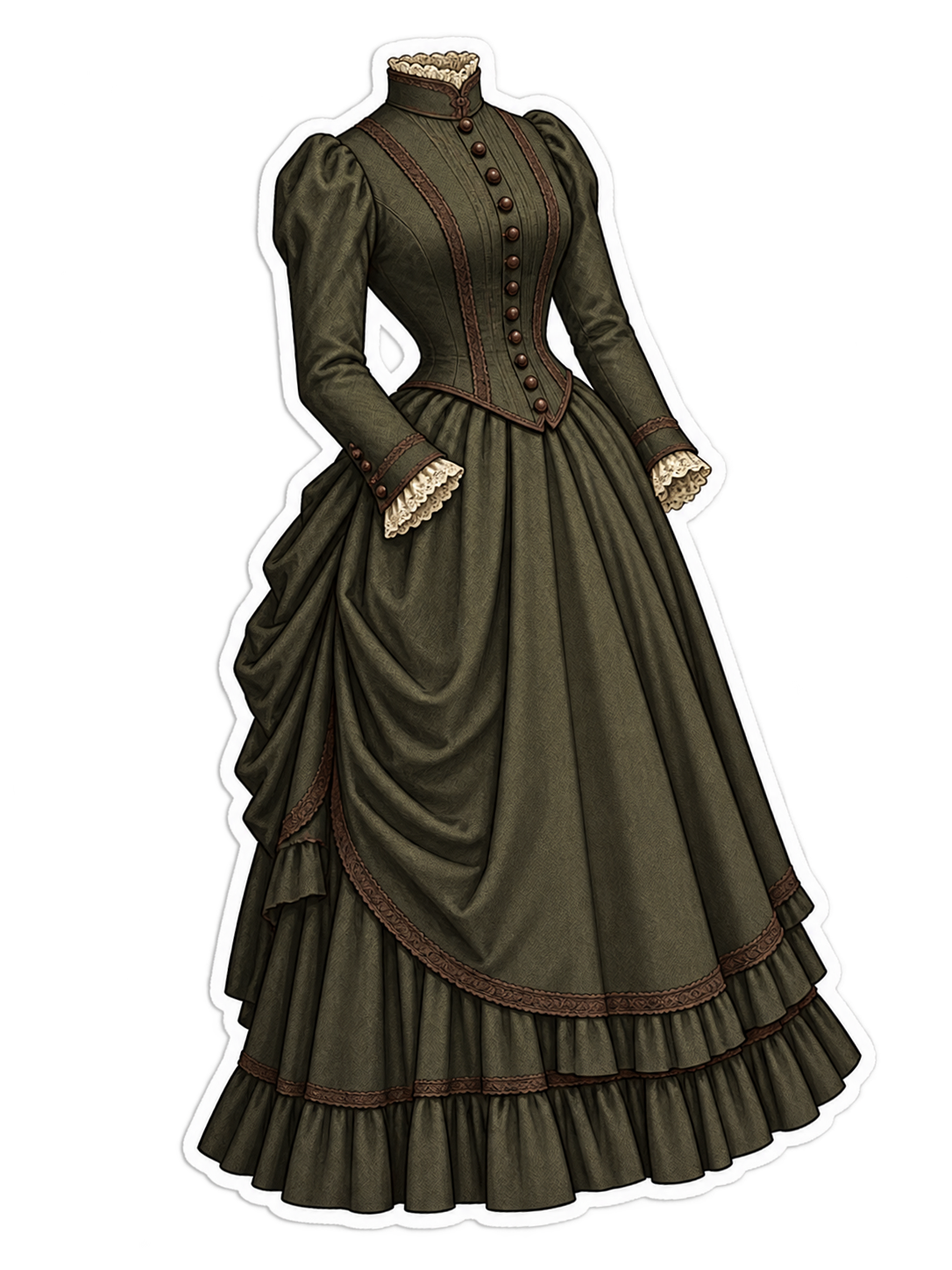
Some people say that Jack the Ripper used to dress as a woman to be able to move freely among the prostitutes in Whitechapel. Some even claim to know where he changed clothes. Apparently, he used to do it in Jeanette Winterson’s house. At least, that’s what she told me when I did her dishes.
Fifteen years earlier, I had broken my mother’s trust and school rules to get my hands on Oranges Are Not the Only Fruit and The Passion. Now I stood with her in the kitchen, where Jack put on a frock. Did I believe her? Does it matter?
But I’m getting ahead of myself.

I grew up in a small town in Sweden. I had a TV in my bedroom. It was a heavy, boxy thing with a temper. It required daily coaxing and a delicate twisting of the aerial to deliver a clear picture. We only had two channels, which meant you were stuck with whatever was on. Back then, I considered it a curse. Now I know it was a blessing.
One day, I turned on the TV and stumbled into the opening credits of a new BBC drama. Northern England. Working class. Dark brick buildings, wet streets, and heavy skies. Then came a little girl walking hand in hand with her fearsome mother, who was administering an advanced Bible quiz.
But there was something else too. A stubborn refusal to submit to hardship. Nobody had ever told me that was an option. I didn’t know the TV series was based on a novel, but somehow I just knew. When it ended, I scoured the end credits and scribbled “Winterson” on the back of a cinema ticket to Indiana Jones and the Last Crusade. It might have been Dr Jones’s last crusade (it wasn’t, by the way), but it was the beginning of mine.
I grew up in a house where my mother’s mood was our weather. But I was “en glad skit” – “a happy little shit” – as we say in Swedish. I didn’t need life to be perfect. I just needed permission to be happy anyway.
The next day, my mother drove me to school. I hopped out of the car, waved goodbye, walked straight past the school and on to the local library. Whatever it was I needed to learn was there.

The library was built in the 1970s around the idea that a library could be more than a place to store books. I quickly found W and let my finger skim past Walker, Waugh, Wilde … Winterson! Not only one, but two: Oranges Are Not the Only Fruit and The Passion. In my little library.
If a librarian had tapped me on the shoulder and asked if I’d found anything, I could only have answered: “Yes, wonderful things!”
I couldn’t risk going home until after three, so I read Oranges curled up in one of the library’s Egg chairs. Then I went home in a daze, made myself a couple of sandwiches and read The Passion. And it was evening, and it was morning. Another life. It took me years to understand what that day did to me.
Neither novel deals with easy topics. Being adopted into a Pentecostal family and growing up gay in 1960s and 1970s northern England is gnarly, to say the least. Joining Napoleon on a winter march through Russia is chilling in every way. But there was such ease to the storytelling. It didn’t flinch. It stood its ground, in beauty and in defiance. And impossibly, joy.
In The Passion, all of this came together in a description of Venice that had me chasing the city. I studied old maps and looked at pictures. I imagined myself in a black gondola on the lagoon at night. I even got a travel catalogue, only to realise the savings I didn’t have wouldn’t get me there. But even if the bricks and mortar of Venice have escaped me to this day, I did stumble across Invisible Cities by Italo Calvino. I found the idea of Venice.
Calvino took on the world in a way that by now felt like home. Every time it would have been easy to let reality weigh the words down, Calvino let them soar. Not to drift away from the hard stuff, but to get a better view of it.
A few years later, as a student in Uppsala, I realised just how deliberate this was. Calvino had been writing a series of lectures when he died: Six Memos for the Next Millennium. He finished five of the six. Thankfully, one was “Lightness”. I read it in another, much grander library with harder chairs and a stricter “Shhh!” policy.
At last, I could put words to what had happened to me at sixteen. Everything was there. The connections lit up in my head, pinging between Winterson and Calvino, then shooting off towards works that seemed to have no business belonging together. Crouching Tiger, Hidden Dragon. Orlando. 9 to 5. My life.
I loved being a student. I was good at it. But academia had started to feel heavy. I did not fit the system. I knew it. They knew it. So I left my PhD studies to start the Swedish branch of a Nordic publishing house.
A couple of years in, I chanced it. I wrote Winterson an epic email. Epic as in long. “Hold my beer, Homer!” long. I proposed a Nordic relaunch: her new novel, Lighthousekeeping, and the two books I had found in my little local library. Her reply arrived within minutes: “Ok. Let’s do it. /JW”
And so we did.
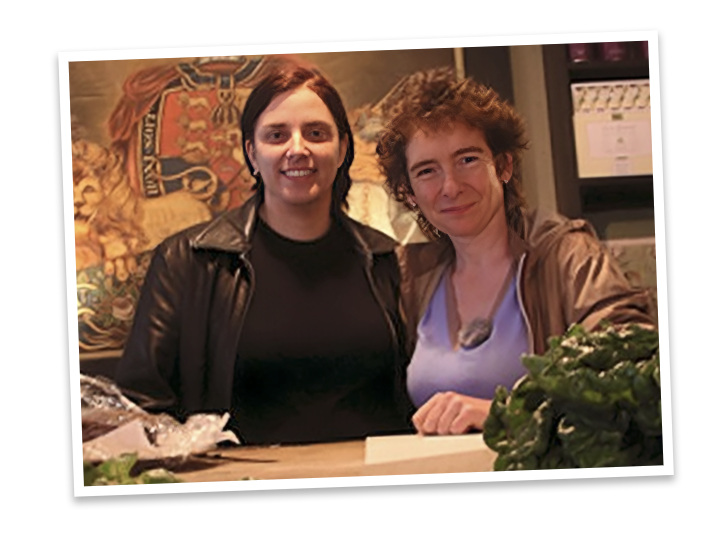
I translated all three. Lighthousekeeping had never appeared in Swedish. The other two had — in the editions I’d read at sixteen. Now I returned to them as a translator. I wanted to do it. My boss agreed. For me, it was all heart. For him, all wallet. It was not the only thing we saw differently.
Then Swedish television wanted an author interview. And so, fifteen years after skipping school to find Winterson at my local library, I found myself knocking on her door in Spitalfields. The day after I’d decided to quit.
Swedish television had sent a friendly giant to operate the camera. A small Georgian townhouse from the 1780s is not built for giants. He had to walk sideways up the narrow steps to the kitchen and moved through the rooms like Gandalf in a hobbit house.

The space was sparsely furnished. Functional. An iMac and an electric kettle signalled that the 21st century had indeed arrived, but this house existed in its own time. Out there, Spitalfields hurried on. In here, piles of books reigned supreme.
The giant brought his gear into the living room, a corner room with red walls, green wood panelling, and a roaring cast-iron fireplace. Once everything was set up, Winterson sat on a chair in the middle of the room. The journalist sat on the dark wood floor in front of her. I curled up on a small chest in the corner, the only space left out of shot. My phone buzzed. I turned it off.
As the interview progressed, I settled into my corner. I was the only one without a job to do. In a couple of weeks, that would be permanent. But not here. Today I was sitting just out of shot while Winterson read a few passages from her books. Passages that I had chosen. It was a good day.
It takes time to make TV. The coffee cups piled up in the kitchen. When we were done filming, I started washing them up. I’ve worked at IKEA. If there’s something to be done, I’ll pitch in.
Kitchens are for chatting, so chat we did. The house had stories to tell, and Winterson told them. There was the grey lady who kept you company if you sat reading in one of the chairs in front of the fireplace. Another lady checked your pulse if you stayed in the guest room in the basement. And then there was Jack the Ripper. Maybe.
The sources are shaky. According to Winterson, the Jack the Ripper tours used to stop outside and tell the story of Jack slipping into a frock before he went in search of women to kill. With my hands in the warm water, I thought about the five women. One of them, Elizabeth Stride, was Swedish too.
Before I left, I found myself alone in the living room.
On top of one of the many piles of books was a battered copy of Six Memos for the Next Millennium.
Had she underlined anything? Perhaps written some notes?
I could have opened the book.
Reader, I didn’t.

Still feeling a bit culturally promiscuous?


