

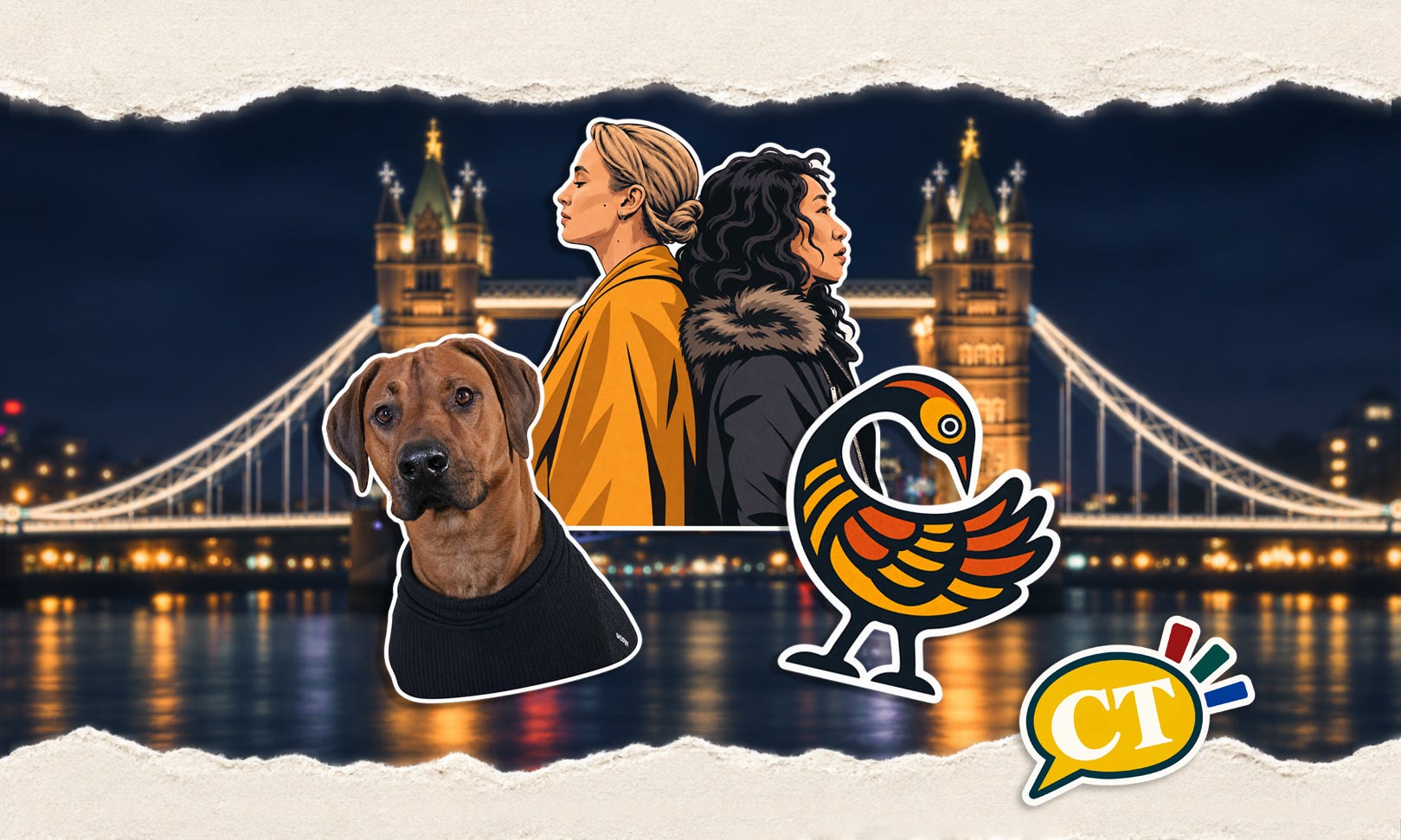
Every time I leave home, I tell Henry (the best dog ever) exactly when I’ll be home again. I give him a good cuddle. I tell him I love him, then head for the door. Then I ALWAYS look back at him to reassure him that I’m coming back. Or perhaps to reassure myself that he knows I’m not just disappearing on him.
One morning, I was a bit stressed and forgot that last look back. It bugged me all day. It also made me think about the act of looking back in a broader sense.
If you go way back, looking back seems to be fraught with all sorts of danger. And yet, we humans keep looking back – left, right and centre.
Orpheus could bring his dead wife Eurydice out of the underworld on one condition. He must not look back at her until they reach the world of the living. Of course, he looked back, and Eurydice melted back into the shadows of the underworld.
In Genesis, Mr and Mrs Lot flee the destruction of Sodom with their daughters. An angel tells them to flee for their lives, but not to look back. Mrs Lot looks back and is promptly turned into a pillar of salt.
There’s no clear explanation as to why looking back carries such a terrible cost in these two stories. It could be a test of trust or self-control. Or a warning against hesitation or clinging to the past. It could just be divine temper. The gods of Olympus were fickle. The God of the Old Testament comes off as a bit volatile. People have been debating different interpretations for millennia.
The NET Bible's translation notes also suggest that the Hebrew verb for looking back implies a sustained gaze rather than a fleeting glance.
Perhaps Orpheus glances back at someone he’s trying to recover, while Mrs Lot looks back at a world she knows she has already lost.
So, why did I feel uneasy all day just because I didn’t look back at my dog? I don’t think it’s the result of divine temper. Maybe there’s more to this uncontrollable urge to look back that Orpheus, Mrs Lot and I share.
Fast forward a couple of millennia and there’s Eve and Villanelle, a former intelligence officer and a fabulously dressed assassin, on Tower Bridge in London in the final scene of the third season of Killing Eve. They have wreaked havoc on each other’s lives. They talk about the past. They talk about the future.
Eve: “When I try and think of my future, I just see your face over and over again.”
Villanelle: “It’s a VERY beautiful face.”
That it is, but it’s clear to them both that their mutual obsession needs to end. Villanelle tells Eve to turn away from her, so that they’re standing back-to-back.
Villanelle: “Now we walk. And we never look back.”
Eve: “But…”
Villanelle: “Don’t turn. Just walk.”
And they do. Then they both stop and look back at each other. Of course they do. Wouldn’t it be much easier to just go and have a pint together? Unlike Orpheus and Mrs Lot, they have no gods to answer to. They made the rule themselves, and they can’t even stick to it for thirty seconds.
Regardless of circumstance and risk, looking back seems to be in our DNA. Perhaps looking back is not a human weakness, but a human need. What if all these stories that hinge on a backward glance are more than just tests or warnings? What if they’re reminding us of something essential about being human?
A little bird told me
I did what I always do. I went down a rabbit hole. Fairly quickly, I stumbled across Janus, the two-faced Roman god. He was the god of doorways, beginnings, and transitions. He didn’t need to turn around. By default, he looked both ahead and backwards at the same time. That’s interesting, but it doesn’t really explain our need to look back.
Then a friend mentioned Sankofa, a philosophical concept from the Akan peoples of West Africa. (Yes, I do have amazing friends!) Sankofa is often depicted as a bird moving forward while looking backwards. Sankofa means something like “go back and fetch it” and is associated with a proverb that says there's nothing wrong with going back for something you’ve forgotten.
Aha! Now we’re getting somewhere. The Sankofa bird doesn’t look back because it struggles to let go of the past. It looks back because it needs to bring something from the past into the future. Maybe the backward glance in all these stories is a physical manifestation of our need to remember. And maybe that’s why it’s so hard not to look back.
There also seems to be a little bit of Sankofa going on in our brains. Yes, I imagine it running around in there like the Road Runner, too. In 2007, psychologists Donna Rose Addis, Alana T. Wong and Daniel Schacter suggested that our ability to imagine the future draws on our ability to remember the past.
Remembering the past and imagining the future involve overlapping brain networks. It seems that we use elements of our past experiences to construct possible future ones. Some memory impairments can even affect our ability to imagine the future. Almost twenty years on, the science still holds up.
There’s looking back, and then there’s wallowing
A little word of warning, though. There’s looking back, and then there’s wallowing. The latter is a dead end. Jay Gatsby, I’m looking at you while playing the tiniest of violins. You should have had a little chat with the Sankofa bird. The point isn’t to recreate the past. The point is to bring what’s useful from the past into the future. It’s like packing for a trip. You don’t pack your bags and remain at home. You pack them because you need that stuff for wherever you’re going.
What about Orpheus and Eurydice? If you’re dead, you’re supposed to stay dead. Maybe Orpheus needed to look back and see Eurydice disappear to begin to come to terms with her death.
Maybe Mrs Lot needed to see Sodom burn to accept that the future would be very different. But what if she failed to accept it? Perhaps the salt pillar doesn’t have to be read as a punishment. What if it’s a manifestation of not being able to let go?
And Eve and Villanelle? Perhaps they wanted to save one last romantic moment together. But that moment could also be a stark reminder of why they really must move on. Well, at least until that unfortunate fourth season.
And Henry and I? That’s about the future, too. I look back so we can capture a little mental snapshot of each other to soften the time until we’re together again. Sometimes a whopping five minutes later. Dog time is special.
Whether we look back to leave something behind or to bring something with us, it has everything to do with where we’re going next.
Packing for a collective future
Now, let’s make a leap of faith together. If access to our individual past is important to our ability to imagine our individual future, what does access to our collective past mean for our ability to imagine our collective future?
As it turns out, we’re in rather good company making that leap. In 2020, Irish psychologist Ciarán Benson explored this very connection in the context of cultural heritage. He describes collective memory as the seedbed for collective imagination. I rather like that image.
Each of us has access to more than our individual past. We have stories, songs, paintings, films. We can tap into a wealth of experiences far beyond our own memories. We can learn from someone else's mistakes and be inspired by people we never met. We can imagine a life beyond what our own past would suggest. And we can do it together.
We have, in fact, built a whole infrastructure to support this. Humanities and art in schools. Libraries, museums, theatres, archives and galleries. What an extraordinary advantage that gives us, both as individuals and as a society. Like the Sankofa bird, we can look back and retrieve what we need for the future. And we have a treasure trove of thousands of years of human experience to rummage through.
You would think that we would be fiercely protective of this infrastructure for individual and collective thinking. Curiously, we’re not.
Instead, in many countries around the world, my own very much included, vital parts of it are being dismantled. There never seems to be enough money for it. Or healthy political interest. Here’s a current example. In Sweden, three state-owned museums risk being chased out onto the street by insane rents. The landlord? The state that owns them.
But undermining our means to look back properly doesn’t eliminate our human need to do it. That puts us in a precarious position.
Without a real connection to the past, we risk filling the gaps with comforting fantasies. But the good old days were never quite that good. They were complicated. We need to know what to leave behind and what to bring with us into the future.
And the future? Without a real connection to the past, we impoverish our visions of what lies ahead. Fewer futures seem possible to us. And I fear the ones we’re left with are increasingly bleak. We’re flinging ourselves into the unknown, untethered.
I’m a stubborn optimist. I still believe in a better tomorrow. But I do think we’d all do well to heed the advice in Bonnie Tyler’s epic banger, “Total Eclipse of the Heart”.
Turn around.

I’d love to hear your thoughts. Big, small or silly. You’re amongst friends here. Spill it! :-)
Peckish for more?


Illustrations created by ChatGPT.
I loved reading this, Anna. Any mention of mythology (and dogs!) and I'm yours, of course, but this is really lovely. And timely. Thanks.